
Tyres and/or wheels
This is less about the swap and more a quicker FAQ around tyre and/or wheel swaps on the Jimny. My longer article on wheel and tyre upgrades has a lot more technical information.
In this article I will be going into ‘for offroad use only’ levels of modifications. This is not to say I endorse the modifications, just being honest about what is needed and what might be the best options for these situations.
Sections
- Quick decision framework
- Tyres
- Buying considerations
- Suggestions
- Stock size
- First ‘bigger’ size
- 29″/235s
- 30-31″
- 32-33″
- Wheels
- Stick with stock or go larger?
- How to make centre caps fit?
Quick decision framework
Tyres
Buying considerations
A really important thing before you upgrade tyres is to understand what matters to you. Some of the factors you need to decide on:
- Legality in terms of overall size
- Legality and insurance implications of wheel fitment
- How much you want to accommodate fitting new tyres
- How hard your offroad use is to justify larger tyres
- What sort of driving you are biased towards
Legality in terms of overall size is relatively straightforwards in Australia:
- You can go up to 25 mm higher in total height from tyres, implying a diameter change of 50 mm. Practically this is a 235/75-15 tyre for most people.
- Some states limit maximum overall lift to 50 mm, so if you have 50 mm via suspension then no larger than stock for tyres; 40 mm lift? Can add 10 mm from tyres, slightly more options are now available to you.
On a Jimny this is usually not a huge problem, as even slightly ‘illegal’ tyres get overlooked as the cars are so much smaller than most 4wds.
Practically speaking I’ll keep ‘legal’ as maximum 2″/50 mm suspension lift and 1″ via tyres, so up to a 29″ overall diameter tyre.
Legality and insurance implications of fitment is slightly trickier. If you have a GVM upgrade, especially pre-registration, you might be limited to stock tyre sizes in your home state; the factory wheels being 5.5″ limits you to a maximum of a 215 wide tyre. Most roadworthy places will not go to that level of detail of checking things, but it might be an issue when it comes to insurance. Fitment also matters because it squeezes the tyres more which makes them balloon out in the centre of the tread which can have implications for tread wear, too.
How much you want to do to accommodate tyres is a complicated subject nothing in life is free, and the more you change from stock the more likelihood modifications are needed to make the tyres fit:
- Once you go beyond about a 28.5″ tyre (so, 235/75-15 or bigger), you generally need to trim the inside of the front bumper where it meets the inner wheel arch. Fitted a bullbar? Probably already been trimmed.
Yes, this is irrespective of a suspension lift or not; at full bump, unless you change bump stops, you have the same clearance tyre to body standard and lifted. - Practically speaking even a 29″ tyre starts to sap the performance of the car, so reduction gearing through the transfer case or regearing the differentials starts to be necessary to make the car enjoyable.
Different people can cope with different levels of lack of performance, so if you’re bigger and on stock gearing and happy with it then that’s fine for you, but a lot of people don’t like it nearly so much
How hard is your offroad use also dictates tyre choice. If you’re just doing beach runs then 33″ tyres and the subsequent supporting modifications are probably overkill. If you’re doing lots of technical rocky climbs then a strictly legal tyre size might not be sufficient for you.
It’s important to be honest here. There is no point over-tyring the car for a once every 4 year trip; you’ll get bored of it and sell it before you get to the trip.
What sort of driving are you biased to is the other angle on this. This is less about the ‘hardness’ of offroad use and more about the terrain and conditions. Again, beach runs mostly and you’re better off (usually) with something less aggressive. An allterrain is a reasonable balance for daily use but won’t be the best in mud; a mud terrain can be something you’re happy to live with but it’ll be worse using it daily.
Again, honesty is the best policy here.
Suggestions
Stock size
If you are wanting to stick to a stock tyre size, there’s really two main viable options in Australia: the Toyo Open Country R/T 2 ply 195/80-15 or the BFGoodrich KO3 allterrain. KO3s are much heavier than the Toyo and noisier, so I’d go for the Toyo at this size.
First ‘bigger’ size
There are a huge range of tyres in the 215/75-15 size range. Any of the allterrains from some major brands will be good: Hankook, Toyo, BFGoodrich, Falken, Kumho or Bridgestone all make excellent tyres in this size.
If you are after a mud terrain then the Hankook Dynapro, the Kumho KL71 or the BFGoodrich KM3 are all fantastic in the mud. The pick of the class (a common theme for Jimnys) is the Yokohama G003.
I think this or the stock size are an underrated choice. Yes you gain almost no clearance under the diffs, but picking a Jimny line is part of its capabilities offroad & being able to keep the engine singing offroad helps so much.
29″ tyres/’235s’
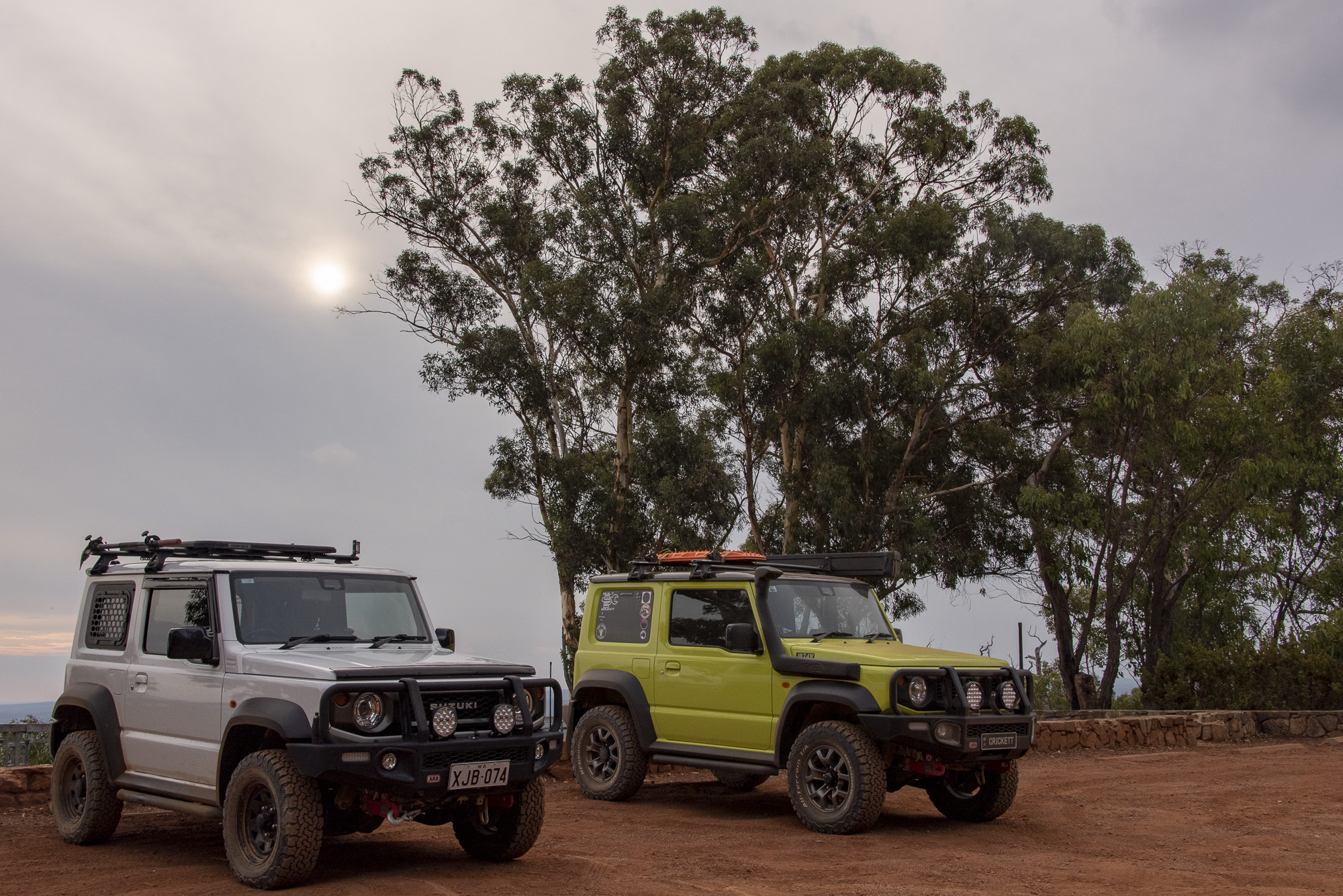
When people talk about maximum legal without worrying about rim fitment, this is the tyre size. This is the size most people think of, and sometimes I think people would be better off going a stock size or a 215 tyre instead. That said, I run this albeit in a skinnier tyre on a 16″ rim: if you’re upgrading rims then it can be a possibility to swap to a 16″ rim as well.
30-31″
32-33″
Wheels
Stick with stock or go larger?
How to make centre caps fit?